MCP

EXTEND YOUR PRICING PLATFORM WITH YOUR OWN AGENTS

Quicklizard's Model Context Protocol (MCP) lets you connect custom AI agents directly to your pricing platform, so you can build your own workflows and bring pricing intelligence into the tools around it.
Built for Pricing. Open for Everything Around It

The Quicklizard UI is built on the expertise of the world's best pricing professionals, refined across years of implementations with retailers in every vertical. For steering pricing, reviewing recommendations, and analyzing performance, there is no faster or more efficient way to work. Yet, we even go one step further by opening it for you with an MCP layer:

Build Your Own Agents

Go beyond the standard views with custom agents that interact directly with your pricing platform, shaped around the specific questions your team needs to answer.

Bring Pricing Intelligence Anywhere

Feed Quicklizard insights into the systems around pricing, from setting buffer stocks in replenishment to prioritizing online marketing spend.

Ask in Plain Language

Query your pricing platform in natural language and let an agent do the work, without writing queries or building custom views.

Grounded in Live Data

Every agent works from real, current pricing data through controlled access to the platform, not stale exports or disconnected snapshots.

How Our MCP Works

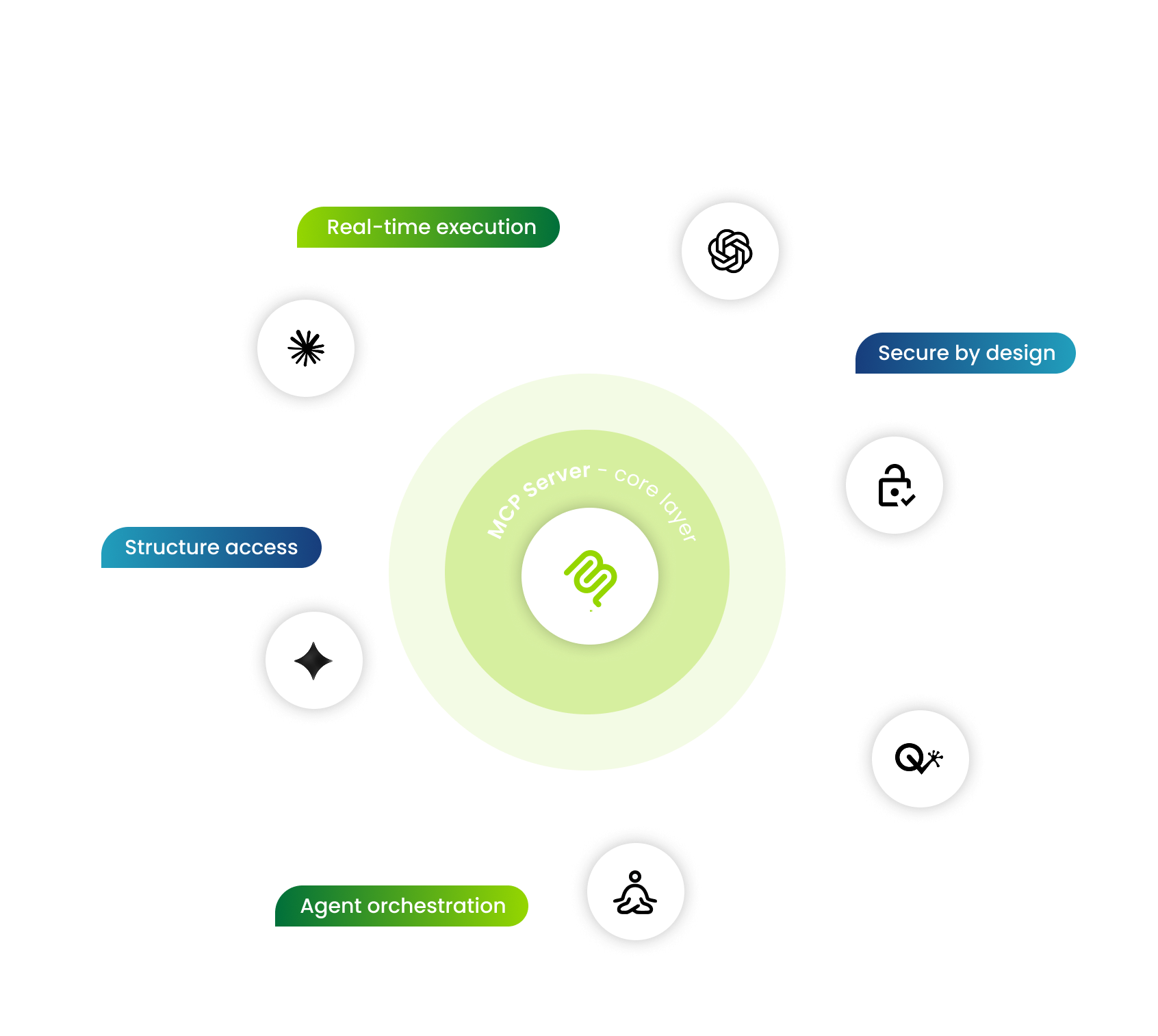
One MCP Layer, Every AI Agent, Full Context

The Quicklizard UI remains the fastest way to run everyday pricing. MCP adds a structured, secure layer around the same engine, exposing its capabilities as standardized tools that AI agents can access directly, so where a task falls outside the typical workflow or the data needs to live in another system, your agents can now reach it.

1 Enterprise-Secure by Design

Tenant isolation and least-privilege permissions limit what any agent can do, and every tool call is logged. Untrusted data is cleaned before it reaches your agents, lowering the risk of prompt injection.

2 Real Agents, Not Just Prompts

An agent on MCP works the problem: it decomposes a request, calls multiple tools, pulls from different data sources, and iterates until the task is done, so complex work happens in one interaction rather than a sequence of manual steps.

3 Structured Tool Catalog

Capabilities are exposed as a catalog of MCP tools: controlled entry points into backend services across stock, strategies, promotions, competition, BI, configuration, and pricing, all grounded in live business data.

4 Bring Your Own Agent

Because MCP is a standard protocol, it is not tied to one model or vendor. Connect agents built on Anthropic, Google, or OpenAI, or the tools your team already uses, and work within your own environment.

Business Impact

Impacting the KPIs That Matter

Custom Workflows, No Custom Build

Answer the questions specific to your business with agents you configure yourself, without commissioning one-off development for every new analysis.

Put Quicklizard's insights to work beyond pricing, feeding segmentation and performance data into replenishment, marketing, and BI.

Analysts and commercial teams reach answers themselves, in plain language, instead of waiting on developers for custom logic or data pulls.

You get answers in a single conversation instead of chaining exports, queries, and manual steps, so decisions happen sooner.

Explore the Platform

Ready to Extend Your Pricing Platform?

Questions You’re Already Asking

What is MCP, and how is it different from using the Quicklizard UI?

MCP is an open layer that lets AI agents connect directly to your pricing platform. It does not replace the UI, which stays the fastest way to run everyday pricing. It adds a way to handle tasks that fall outside the standard workflow or need to reach other systems.

No. MCP is an open protocol, so you can connect agents built on Anthropic, Google, or OpenAI models, or tools your team already uses.

Yes. Every request is scoped to a single tenant, agents operate under least-privilege permissions, and every tool call is logged. Untrusted data is cleaned before it reaches your agents to lower the risk of prompt injection.

Anything beyond the typical pricing workflow: one-off analyses specific to your business, custom agents you build yourself, or feeding pricing intelligence into systems like replenishment, marketing, and BI.

No. Teams can query the platform in natural language and configure their own agents, without commissioning custom development for each new analysis.