Forecasting and Planning

ANTICIPATE DEMAND. PLAN INVENTORY. PRICE WITH CONFIDENCE.

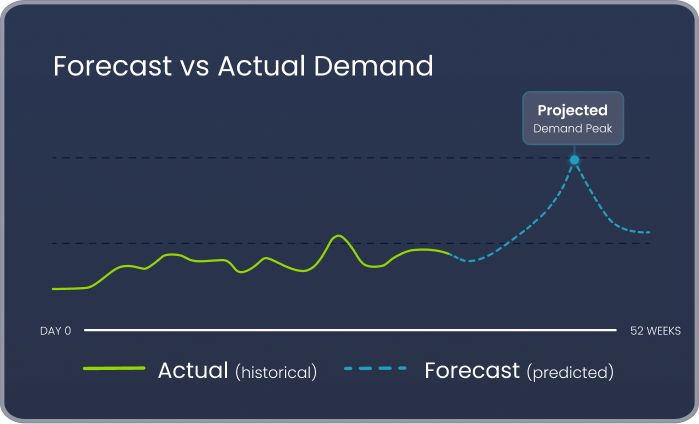
Quicklizard’s Forecasting and Planning delivers SKU level demand and inventory forecasts that account for seasonality, promotions, competition, and assortment dynamics, enabling more confident pricing, replenishment, and lifecycle decisions.
Forecasting and Planning hero image

Forecasting Gaps Create Costly Decisions

Retail planning depends on forecasts that reflect real world complexity. When demand forecasts do not account for promotions, price changes, competitor moves, and supply constraints, planning becomes reactive and costly. The result:

Weak Demand Signals

Simple forecasting methods fail when promotions run, competitors move, or supply shocks disrupt demand patterns.

Inventory Imbalance

Stock-outs, overstocks, and rushed markdowns increase when forecasts ignore replenishment cycles and fulfillment constraints.

Promo and Price Blind Spots

Forecasts become biased when promotional lift and price elasticity are not modeled.

Siloed Planning

Pricing, merchandising, and supply teams operate on different assumptions, creating friction and missed opportunities.

Forecasting must be multidimensional and tied to execution. Forecasts that do not support pricing, promotion planning, and replenishment create cost, not insight.

The Quicklizard Solution

Forecast. Plan. Coordinate.

We deliver SKU level demand and inventory forecasts that account for seasonality, promotions, competition, and assortment dynamics. By combining enterprise grade data with hybrid ML models and scenario planning, we enable more confident pricing, replenishment, and lifecycle decisions across all sales channels.

1 Promotion Aware SKU Demand Modeling

Demand is forecasted at the SKU level while accounting for factors such as promotions, price changes, and channel mix. This specific modeling separates base demand from promotional uplift to ensure forecasts remain reliable even during intensive sales periods.

2 Inventory-Aware Forecasting and Sell Through

Models predict sell through velocity and flag potential stock-out risks or excess inventory before they impact availability. By including inventory constraints directly in the demand models, the system recommends price paths that protect margins and prevent wasteful overstock.

3 Market Intelligence and Competitor Integration

Competitor price moves are incorporated directly into demand forecasts using the Competitor Sensitivity Index. This isolates competitor driven demand shifts from standard local patterns, significantly improving the accuracy of forecasts based on real world market signals.

4 Scenario Planning and Operational Alignment

Teams evaluate different pricing and promotion scenarios using what if simulations to compare expected outcomes for revenue, profit, and stock turn. These insights are then translated into coordinated planning outputs, such as demand plans and replenishment recommendations shared across the organization.

Business Impact

Impact at a Glance

Improved forecast accuracy

Reduce stock-outs and overstock through more reliable demand signals.

Price and promotion aware forecasts reduce lost sales and limit unnecessary markdowns.

Merchandising, planning, and pricing teams operate from one forecast and one plan.

Fewer emergency replenishment actions and fewer reconciliation cycles.

More predictable promotion uplift reduces wasted spend and improves promo performance.

Explore the Platform

Turn Forecasting into a Competitive Edge

Questions You’re Already Asking

What types of forecasts do you provide?

SKU-level demand, sell-through, inventory-aware forecasts, promo uplift estimates and supplier-aware replenishment suggestions.

Promotions and price changes are modeled explicitly (promotion-aware), producing unbiased baseline demand and promo uplift estimates within the same model.

Yes, forecasts and scenario outputs feed Price Automation, Promo Effectiveness and Revenue Management so planning and execution align.

Sales/POS, inventory, promotions, pricing, product catalog, supplier lead times and, ideally, competitor pricing feeds for CSI coupling.

Fast pilots run in weeks (4-8); full enterprise rollouts typically plan for ~10-14 weeks.