Competitive Pricing

COMPETITIVE PRICING INTELLIGENCE FOR RETAILERS

Quicklizard combines real-time competitor price monitoring with demand intelligence to identify which competitor price moves actually matter, helping retailers respond strategically, protect margins, and avoid unnecessary price matching.
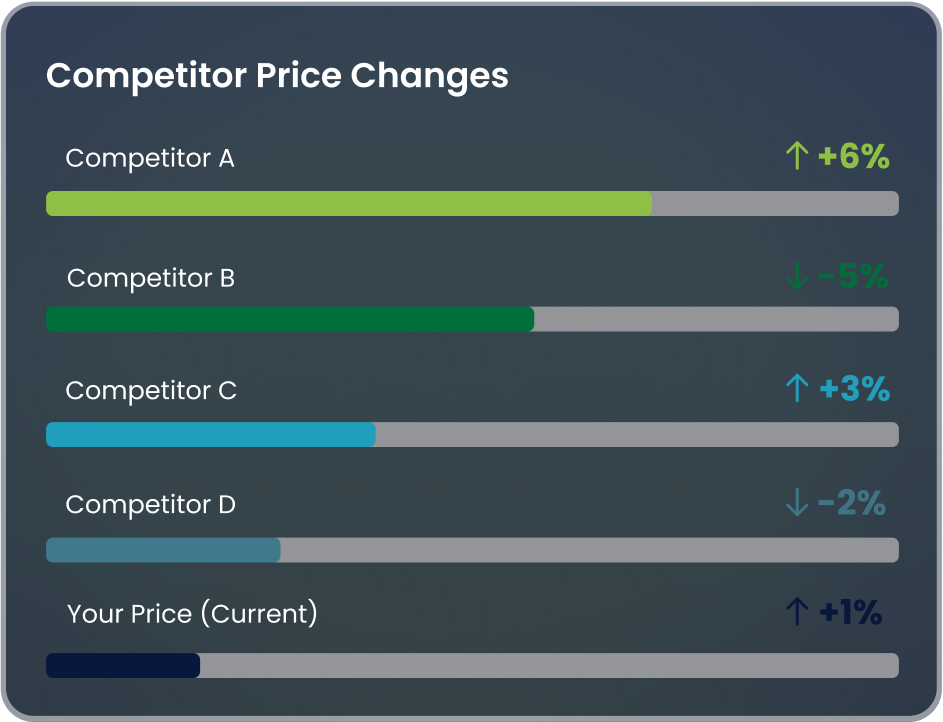
The Problem: Not All Competitor Moves Are Equal

Retailers face thousands of competitor price changes across products, channels, and markets. Without understanding which moves actually influence demand, pricing teams can react too often, match too broadly, and sacrifice margin without improving commercial outcomes.

Noise Over Signal

Many competitor price changes have little or no impact on demand, yet can still trigger unnecessary reactions.

Margin Leakage

Blanket price matching can sacrifice margin without generating enough incremental demand to justify the change.

Operational Drag

Pricing teams spend valuable time tracking and investigating competitor moves instead of focusing on higher-value pricing decisions.

Unclear Competitive Set

Not every competitor influences every product equally, making it difficult to know which prices should actually inform your strategy.

Competitive pricing requires more than knowing what competitors charge. Pricing teams need to understand which competitors matter, which price changes influence demand, and when responding will actually improve commercial outcomes.

The Quicklizard Solution

How Quicklizard’s Competitive Pricing Intelligence Works

Quicklizard combines competitor price monitoring, product matching, demand modeling, and AI-driven analysis to turn market data into actionable pricing intelligence. Instead of reacting to every competitor move, teams can identify relevant signals, understand their impact on demand, and incorporate them directly into pricing decisions.

1 Real-Time Competitor Price Monitoring

Collect and consolidate competitor pricing data across relevant products, channels, marketplaces, comparison engines, and other market sources. Pricing teams gain an up-to-date view of competitor prices without manually tracking changes across the market.

2 Product Matching & Market Intelligence

Map competitor products and prices to the correct SKUs using exact product identifiers such as EAN, ISBN, and other product identifiers alongside intelligent fuzzy logic and confidence scores for similar matches. Quicklizard helps create a reliable competitive market view so pricing decisions are based on relevant, comparable products rather than market noise.

3 Competitor Price Impact Analysis

Go beyond tracking competitor prices to understand how those changes affect your demand. Quicklizard uses statistical and machine learning models that account for factors such as seasonality, inventory, promotions, and other demand drivers to isolate the impact of competitor pricing at SKU level.

4 Differentiated Response & Safe Execution

Turn competitive pricing intelligence into action. Run what-if simulations, evaluate response options by expected commercial impact, and feed relevant signals into Price Automation or analyst recommendations. Respond where competitive moves matter while avoiding unnecessary price matching. Teams can define guardrails by competitor, channel, region, and commercial constraints such as MAP, MSRP, and RRP.

From Competitor Prices to Demand Impact

Traditional competitor price monitoring tells you what changed.
Quicklizard helps determine whether that change actually matters.

Quicklizard’s Competitor Sensitivity Index (CSI™) measures how competitor price movements influence demand at SKU level. Rather than treating every competitor equally, CSI™ helps identify and prioritize which competitors and price changes have a meaningful impact on customer behavior. Models continuously retrain as competitor behavior, demand, and assortments change, helping the analysis remain aligned with current market conditions.

This intelligence can then inform competitive pricing and dynamic pricing decisions, helping teams respond selectively instead of automatically matching the market.

Monitor
the Market

Measure
Demand Impact

Prioritize
Relevant Signals

Take the Right
Pricing Action

Impact at a Glance

Quicklizard helps pricing teams turn competitor pricing data into more focused and profitable decisions:


Protect margin where it matters

Respond selectively to competitor moves that actually affect demand, avoiding unnecessary undercutting and margin erosion.

Focus competitive responses where they can improve commercial outcomes rather than matching broadly across the assortment.

Filter irrelevant competitive signals and avoid price changes that are unlikely to influence demand.

Manage competitive pricing strategically across KVIs and other price-sensitive products without racing to the bottom.

Reduce manual monitoring and shorten analyst cycles with prioritized competitive signals and recommendations.

Explore the Platform

Discover How Competitive Pricing Can be a Source of Margin Protection, Not a Race to the Bottom

Use competitor pricing data to make smarter decisions without automatically matching every market move.

Questions You’re Already Asking

What is competitive pricing intelligence?

Competitive pricing intelligence software combines competitor price monitoring with analysis that helps retailers understand how competitor prices and market changes affect their business. Quicklizard goes beyond simply tracking competitor prices by identifying which competitor moves actually influence demand, helping pricing teams make more informed pricing decisions.

Competitor price monitoring is the process of continuously tracking competitor prices across relevant products, channels, and markets. Quicklizard consolidates competitor pricing data and maps it to relevant SKUs (including both, exact and similar matches) so pricing teams can incorporate current market information into their pricing decisions.

Quicklizard uses statistical and machine learning models to measure how competitor price changes affect demand at SKU level while accounting for factors such as seasonality, inventory, promotions, and other demand drivers. This helps distinguish meaningful competitive signals from market noise.

Quicklizard’s Competitor Sensitivity Index (CSI) measures how competitor price movements influence demand at SKU level. It helps pricing teams identify which competitors and price changes materially influence customer behavior so they can prioritize relevant signals and avoid unnecessary price matching.

Competitive pricing uses market and competitor data to inform pricing strategy, but it does not require matching every competitor price. Quicklizard helps retailers determine when competitor moves are relevant to demand so they can respond selectively while protecting margin.

Yes. Relevant competitive pricing signals can feed into Quicklizard’s Price Automation workflows. Retailers can combine these signals with business rules, impact and confidence thresholds, guardrails, and approval requirements to automate appropriate responses while maintaining control. Hybrid approval workflows are also supported when teams want human review before execution.

Competitive pricing provides external market signals that can be incorporated into dynamic pricing decisions alongside factors such as demand, price elasticity, inventory, costs, promotions, and business rules. This allows retailers to respond to relevant competitor moves without making competitor prices the sole driver of pricing decisions.

Retailers should look for competitive pricing software that provides reliable competitor price monitoring, accurate product matching, current market data, and the ability to analyze how competitor price changes affect demand. The strongest solutions should also integrate competitive pricing intelligence with pricing workflows, business rules, automation, and existing retail systems.